
If you’ve ever exchanged money for a holiday abroad, you’ve already taken part in the foreign exchange market — just on a tiny scale. Forex trading is that same idea, scaled up into the largest, most liquid financial market in the world. Every single day, more than $7 trillion changes hands as currencies move against one another, driven by trade, travel, investment, and speculation.
For millions of beginners researching this topic, the questions are almost always the same: What exactly is forex trading? How do people make money from it? Is it safe? And how do I actually get started? This guide answers all of that in plain language, without assuming you have any background in finance.
What Is Forex Trading?
Forex — short for “foreign exchange” — is the global marketplace where currencies are bought and sold. Forex trading is the act of exchanging one currency for another with the goal of profiting from the change in its value.
Think about it this way: if you’ve traveled internationally, you’ve converted your home currency into the local currency of your destination. If the exchange rate moved favorably between the time you bought that currency and the time you needed to convert it back, you may have ended up with more money than you started with — even though you didn’t “do” anything except hold the currency. Forex traders do this deliberately and repeatedly, trying to predict which way exchange rates will move and positioning themselves to profit from it.
Unlike the stock market, where you buy shares in a single company, forex trading always involves a pair of currencies. You’re not just buying a currency — you’re buying one currency while simultaneously selling another. This pairing is the foundation of everything else in forex, so it’s worth understanding clearly before moving on.
Understanding Currency Pairs
Every forex trade involves a currency pair, written in the format EUR/USD, GBP/JPY, or USD/CAD. The first currency listed is called the base currency, and the second is the quote currency. The exchange rate tells you how much of the quote currency you need to buy one unit of the base currency.
For example, if EUR/USD is trading at 1.0850, that means 1 euro is worth 1.0850 US dollars. If you believe the euro will strengthen against the dollar, you would “buy” EUR/USD. If the rate later rises to 1.0950, you can sell your position and pocket the difference. If you believe the euro will weaken, you would “sell” EUR/USD instead, profiting if the rate falls.
Currency pairs are generally grouped into three categories:
- Major pairs — These involve the US dollar paired with other heavily traded currencies, such as EUR/USD, GBP/USD, USD/JPY, and USD/CHF. They make up the bulk of trading volume and tend to have the tightest spreads (more on that shortly).
- Minor pairs (also called cross pairs) — These don’t include the US dollar but still involve major economies, such as EUR/GBP or AUD/NZD.
- Exotic pairs — These pair a major currency with the currency of a smaller or emerging economy, such as USD/TRY (Turkish lira) or USD/ZAR (South African rand). Exotics tend to be more volatile and less liquid.
Beginners are almost always advised to start with major pairs, since they’re the most predictable in terms of liquidity and typically come with lower trading costs.
Why Does the Forex Market Exist?
It’s worth pausing to ask why this market exists at all, because it helps explain how it actually works. The forex market wasn’t built for speculation — that came later. It exists because the global economy runs on different currencies, and someone has to facilitate the constant exchange between them.
A few of the core reasons currencies need to be exchanged:
- International trade — A car manufacturer in Japan selling vehicles to the United States needs to convert dollars back into yen to pay its domestic costs.
- Tourism and travel — Millions of people convert currency every day for trips abroad.
- Foreign investment — When an investor buys property or stocks in another country, they first need that country’s currency.
- Central bank operations — Governments and central banks buy and sell their own currencies to manage inflation, interest rates, and economic stability.
Speculative trading — buying and selling currencies purely to profit from price movement — now makes up the overwhelming majority of daily forex volume, far outweighing actual trade and tourism-related exchange. This is part of why the market is so liquid: there’s always someone willing to take the other side of your trade.
How the Forex Market Operates
One of the most distinctive features of forex trading is that there is no single, centralized exchange — unlike the New York Stock Exchange or the Nasdaq for stocks. Instead, forex trading happens over-the-counter (OTC), through a global network of banks, financial institutions, brokers, and individual traders, all connected electronically.
This decentralized structure means the forex market operates 24 hours a day, five days a week, following the sun around the globe through four major trading sessions:
- Sydney session — Opens the trading week
- Tokyo session — Asian trading hours
- London session — Considered the most active session, with the highest trading volume
- New York session — Overlaps with London for several hours, creating the busiest period of the day
Because these sessions overlap, there’s almost always a liquid, active market somewhere in the world. The market closes only on weekends, when most banks and institutions are shut.
Who Actually Participates?
The forex market includes several tiers of participants, each playing a different role:
- Central banks and governments — These are the heavyweights, capable of moving markets through interest rate decisions or direct currency intervention.
- Commercial and investment banks — Banks trade enormous volumes both for clients and on their own behalf, forming the backbone of market liquidity.
- Hedge funds and institutional investors — These large players trade based on macroeconomic strategies, often holding positions for weeks or months.
- Corporations — Multinational companies exchange currency to pay overseas suppliers or repatriate profits.
- Retail traders — Individuals trading from home through online brokers. This is the fastest-growing segment of the market, enabled almost entirely by internet access and trading platforms.
If you’re a beginner reading this, you fall into that last category — and it’s a category that has grown enormously over the past two decades, thanks to lower barriers to entry and increasingly accessible trading technology.
How Do Traders Actually Make Money in Forex?
At its core, forex profit comes from correctly predicting whether a currency pair’s price will rise or fall, and positioning your trade accordingly.
- If you think the base currency will strengthen relative to the quote currency, you buy (go “long”).
- If you think the base currency will weaken, you sell (go “short”).
The profit or loss is determined by the difference between your entry price and your exit price, multiplied by the size of your position.
A Simple Example
Suppose EUR/USD is trading at 1.1000, and you believe the euro will rise against the dollar. You buy one standard lot (100,000 units of the base currency). If the price rises to 1.1050, that’s a 50-pip movement in your favor (a “pip” — short for percentage in point — is the smallest standard price movement in forex, usually the fourth decimal place). On a standard lot, each pip is typically worth about $10, so a 50-pip move would represent roughly a $500 profit.
Of course, the same trade could move against you. If EUR/USD fell to 1.0950 instead, you’d be looking at a $500 loss. This symmetry — equal potential for gain or loss — is fundamental to understanding the risks involved.
Leverage: A Double-Edged Sword
One feature that sets forex apart from many other markets is the widespread availability of leverage. Leverage allows traders to control a much larger position than the amount of money they’ve actually deposited. For example, with 50:1 leverage, a trader could control a $50,000 position with just $1,000 of their own capital.
Leverage is often marketed as one of forex trading’s biggest attractions, since it can dramatically amplify profits. But it cuts both ways — it amplifies losses just as easily, and it’s one of the primary reasons beginner traders lose money faster than they expect. A small, unfavorable price movement on a highly leveraged position can wipe out an account quickly. Most experienced traders and financial educators stress that leverage should be used cautiously, if at all, by beginners.
Key Concepts Every Beginner Should Know
Before placing a single trade, there are a handful of foundational concepts worth understanding thoroughly.
Pips and Pipettes A pip is the standard unit of price movement in forex, generally the fourth decimal place in most currency pairs (or the second decimal place for pairs involving the Japanese yen). Some brokers also quote a fifth decimal place, called a pipette, for even more precise pricing.
Spread The spread is the difference between the “bid” price (what you can sell at) and the “ask” price (what you can buy at). This difference is essentially the cost of executing a trade, and it’s how many brokers make money, especially those offering “commission-free” trading. Tighter spreads mean lower trading costs.
Lot Sizes Forex is traded in standardized units called lots:
- A standard lot = 100,000 units of the base currency
- A mini lot = 10,000 units
- A micro lot = 1,000 units
Most beginner-friendly brokers allow trading in micro or even nano lots, which lets new traders practice with much smaller amounts of risk.
Margin Margin is the amount of money a broker requires you to have in your account to open and maintain a leveraged position. It’s essentially a security deposit, not a fee, but if your losses approach your margin level, your broker may issue a “margin call” or automatically close your positions to prevent further loss — a process called a stop-out.
Bid and Ask Price The bid price is what buyers are willing to pay; the ask price is what sellers are asking for. You buy at the ask and sell at the bid. The gap between them is the spread mentioned above.
What Moves Currency Prices?
Currency values don’t move randomly — they respond to a wide range of economic, political, and psychological factors. Understanding these drivers is central to developing any kind of trading strategy.
- Interest rates — Central bank interest rate decisions are arguably the single biggest driver of currency value. Higher interest rates tend to attract foreign investment, increasing demand for that currency.
- Economic data — Reports like GDP growth, employment figures, inflation data (CPI), and retail sales all offer clues about a country’s economic health, influencing trader sentiment.
- Geopolitical events — Elections, conflicts, trade negotiations, and policy changes can cause sudden, sharp currency movements.
- Market sentiment — Sometimes currencies move simply because traders, collectively, feel optimistic or pessimistic about a country’s prospects — a self-reinforcing psychological force that doesn’t always track perfectly with economic fundamentals.
- Commodity prices — Some currencies, like the Canadian dollar or Australian dollar, are closely tied to commodity exports (oil and minerals, respectively), so their values often move with commodity prices.
Traders typically rely on one of two broad analytical approaches — or a combination of both — to make sense of these factors.
Fundamental Analysis
Fundamental analysis involves studying economic indicators, central bank policy, and geopolitical developments to forecast currency movements. A fundamental trader might watch upcoming interest rate announcements or employment reports closely, trying to anticipate how the market will react.
Technical Analysis
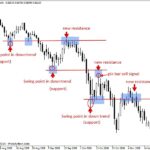
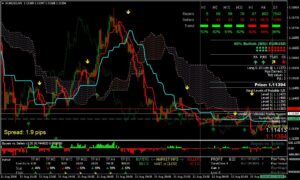
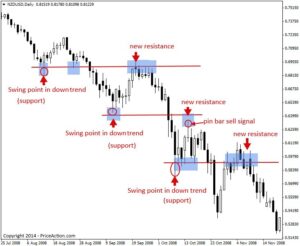
Technical analysis, by contrast, focuses on price charts and historical patterns, working from the idea that price action tends to repeat itself in recognizable ways. Technical traders use tools like moving averages, support and resistance levels, trendlines, and various indicators (RSI, MACD, Bollinger Bands, and so on) to time their entries and exits.
Many traders blend both approaches — using fundamentals to determine the broader direction they expect a currency to move, and technical analysis to fine-tune exactly when to enter or exit a trade.
How to Start Forex Trading: A Step-by-Step Overview
For someone completely new to the topic, here’s a realistic outline of what getting started typically involves.
1. Learn the basics thoroughly first. Before risking any real money, it’s worth investing time in understanding currency pairs, order types, risk management, and basic chart reading. Rushing this step is the most common reason beginners lose money quickly.
2. Choose a regulated broker. A forex broker is the platform through which you place trades. It’s important to choose one regulated by a reputable financial authority, since forex brokers handle your deposited funds directly. Look for regulation from bodies that oversee financial markets in your country or region, and check for transparent fee structures.
3. Open a demo account. Almost every legitimate broker offers a free demo account funded with virtual money. This lets you practice placing trades, testing strategies, and getting familiar with the trading platform without any financial risk. Most experienced traders recommend spending weeks or even months on a demo account before trading real money.
4. Develop a trading plan. A trading plan outlines your strategy, the amount of capital you’re willing to risk per trade, your entry and exit criteria, and your overall risk tolerance. Trading without a plan tends to lead to emotional, reactive decisions — one of the fastest paths to losing money.
5. Start small with real money. Once you feel consistently comfortable on a demo account, consider starting with a small amount of real capital — money you can genuinely afford to lose. Micro lots are ideal here, since they allow you to trade with real consequences but minimal financial exposure.
6. Practice strict risk management. This is perhaps the single most important habit in forex trading. Common practices include:
- Never risking more than 1-2% of your account balance on a single trade
- Always using a stop-loss order to cap potential losses automatically
- Avoiding excessive leverage, especially as a beginner
- Diversifying your trades rather than concentrating everything on one currency pair
7. Keep a trading journal. Recording every trade — why you entered it, what happened, and what you learned — helps you identify patterns in your own decision-making and gradually refine your strategy over time.
Common Mistakes Beginners Make
Knowing what to avoid is sometimes as valuable as knowing what to do. Some of the most frequent pitfalls include:
- Overleveraging — Using maximum leverage on every trade, which can turn a small market move into a significant loss.
- Trading without a stop-loss — Leaving a position open with no automatic exit point, hoping the market will turn back in your favor.
- Revenge trading — Trying to immediately win back losses with larger, more impulsive trades.
- Ignoring risk management entirely — Treating each trade as an isolated bet rather than part of a broader, disciplined strategy.
- Chasing the market — Jumping into a trade after a big price move out of fear of missing out, rather than waiting for a sound setup.
- Underestimating costs — Forgetting about spreads, overnight financing fees (called “swap” or “rollover” rates), and other costs that eat into profits over time.
Is Forex Trading Risky?
Yes — and this deserves to be stated plainly rather than glossed over. Forex trading carries substantial risk of loss, and studies consistently show that a large majority of retail traders lose money over time. The combination of leverage, market volatility, and the psychological pressure of real-time decision-making makes it genuinely difficult to trade profitably and consistently.
This doesn’t mean forex trading is something to avoid entirely or that no one succeeds at it — clearly, institutions and some skilled individual traders profit from it regularly. But it does mean beginners should approach the market with realistic expectations, treat any money they trade with as money they could lose, and prioritize education and risk management far above the pursuit of quick profits.
Forex Trading vs. Other Markets
It’s worth briefly comparing forex to other well-known markets, since beginners often wonder how it stacks up.
- Compared to stocks, forex offers far greater liquidity and 24-hour access, but lacks the ownership stake and dividend potential that come with owning shares in a company.
- Compared to cryptocurrency, forex markets are generally less volatile and have existed far longer, with more established regulatory oversight — though crypto markets operate continuously, including weekends, unlike forex.
- Compared to commodities, forex trading tends to be more directly influenced by macroeconomic policy and interest rates, while commodities often respond more to supply and demand fundamentals like weather or geopolitical supply disruptions.
Each market has its own risk profile, and many traders eventually diversify across more than one.
Final Thoughts
Forex trading, at its core, is simply the exchange of one currency for another in the hope of profiting from price movement — but the mechanics underneath that simple idea are genuinely sophisticated. It’s a market shaped by central bank policy, global trade flows, economic data, and the collective psychology of millions of participants trading around the clock.
For beginners, the path forward isn’t complicated, even if the market itself is: learn the fundamentals, practice extensively on a demo account, develop a disciplined trading plan, and never risk more than you can afford to lose. Forex trading offers genuine opportunity, but it rewards patience and education far more reliably than it rewards excitement or impulse. Those who treat it as a skill to be developed over months and years — rather than a shortcut to fast money — tend to be the ones who give themselves the best chance of long-term success.